Shopify guide for beauty brands
A research-backed Shopify playbook for beauty operators covering ingredient education, PDP structure, reviews, UGC, subscriptions, replenishment flows, bundles, and trust-building content.

Editorial note
Beauty conversion is rarely just a design problem. It is usually a proof, education, and trust problem. Strong beauty stores reduce uncertainty by making efficacy, fit, routine placement, and real-customer evidence easier to understand.
Why beauty brands need a different content stack
Beauty is not a low-consideration category. Shoppers are often trying to answer personal questions before they buy: Will this irritate my skin? Is this right for my undertone? Where does this fit in my routine? Is this actually worth the price? On a physical shelf, some of that hesitation is handled by texture, packaging, scent, swatches, and in-store guidance. Online, your content stack has to do that work.
“Health and Beauty users need to replicate the ‘in-store experience’ as much as possible using website features.”
That is why beauty brands on Shopify should think beyond pretty imagery. The job of the site is to replace missing sensory context with proof. That means stronger product-page structure, clearer ingredient and usage education, review systems that help people find relevant reviewers, routine-building merchandising, and subscription offers that feel like convenience rather than pressure.
Beauty consumers are “value conscious, skeptical of hype, and laser focused on whether products deliver.”
What beauty brands need from their content stack
Ingredient and usage education that lowers hesitation. Beauty shoppers need to understand what a product does, why it works, how to use it, and who it is for.
Proof of efficacy and fit. Not just star ratings, but texture shots, before-and-after context, customer photos, reviewer attributes, and realistic claims.
Routine framing. The best beauty stores do not sell isolated SKUs, they sell regimens, replenishment habits, and sequences.
Subscription logic that respects the category. Replenishable products can work well on subscription, but discovery-led or shade-sensitive products often need a lighter touch.
Bundles that solve a problem. “Barrier repair starter set”, “night routine”, or “travel reset” are stronger than arbitrary discount packs.
Trust content beyond the PDP. Ingredient philosophy, testing standards, sourcing, founder credibility, and retail policies all help answer the questions beauty shoppers research before buying.
Build product pages for evidence, not just aesthetics
Many beauty PDPs still over-invest in brand mood and under-invest in decision support. That is usually a mistake. For beauty, the product page should make it easy to answer five things fast:
- What problem this product is for
- Who it is best for, and who it is not for
- What key ingredients or features matter
- How to use it inside a routine
- What proof supports the promise
A strong beauty PDP usually layers information in three levels:
Immediate scan: core benefit, skin or hair concern, texture, size, price, shade or scent options, review summary, and primary CTA
Confidence layer: ingredients, how to use, routine order, caution notes, shipping and returns, subscription eligibility, verified review highlights
Deep proof layer: ingredient glossary, FAQs, before-and-after context, creator or expert content, and linked policy or sourcing pages
Shopify’s product-page guidance is directionally right here: product pages convert better when descriptions, images, pricing, reviews, and CTAs work together to increase confidence, not when they are treated as separate widgets.
“I’m really impressed with this because it’s really easy to see what ingredients are being used.”
How to structure ingredient and usage education
Ingredient education should not read like a lab report and it should not read like empty marketing. The sweet spot is specific, scannable, and connected to shopper intent.
For most beauty brands, each PDP should clearly cover:
Hero ingredients: what they are and why they matter
Formula exclusions: fragrance-free, alcohol-free, vegan, essential-oil-free, silicone-free, or whatever is relevant to your audience
Usage cadence: daily, nightly, weekly, AM, PM, or alternate days
Routine order: cleanse, treat, moisturize, SPF, or the haircare equivalent
Sensory expectations: finish, texture, scent, lather, residue, drying time
Time-to-value framing: immediate cosmetic result, short-term comfort, or long-term routine payoff
Advanced beauty operators often add an ingredient glossary or “learn” layer so the PDP stays concise while deeper education remains one click away. That works especially well for active-heavy skincare, scalp care, SPF, and categories where irritation, incompatibility, or misuse can create churn.
One more practical rule: teach without forcing shoppers to leave the page too early. Supplementary pages are useful, but core decision information still belongs on the product page itself.
Subscriptions and replenishment should feel helpful
Beauty subscriptions work best when the product already fits a repeat habit. Cleansers, serums, moisturizers, SPF, supplements, and haircare staples are more natural candidates than novelty, experimentation, or shade-sensitive products.
Subscriptions can be “convenient, personalized, and cost-effective” for repeat purchasing.
The mistake is turning every SKU into a hard sell for recurring revenue. A better pattern is:
- Offer subscription first on products with clear replenishment behavior
- Explain when the product is likely to run out
- Let customers skip, pause, swap, or cancel easily
- Use subscription messaging as convenience framing, not fear-based urgency
Pair subscriptions with lifecycle education, such as refill reminders, replenishment timing, and routine content
For discovery-oriented beauty, a flexible “build your routine” or curated replenishment approach is often stronger than a rigid subscribe-and-save box. In beauty, the subscription has to fit the behavior, not the other way around.
The same distinction matters for Ship Later workflows. Most predictable replenishment should still be handled by subscriptions, but limited drops, seasonal kits, refill events, and routine-building purchases can benefit when customers want to keep adding items before one shipment.
is worth considering for that build-a-box use case, not as a replacement for a normal replenishment subscription.
Routine-building bundles beat random upsells
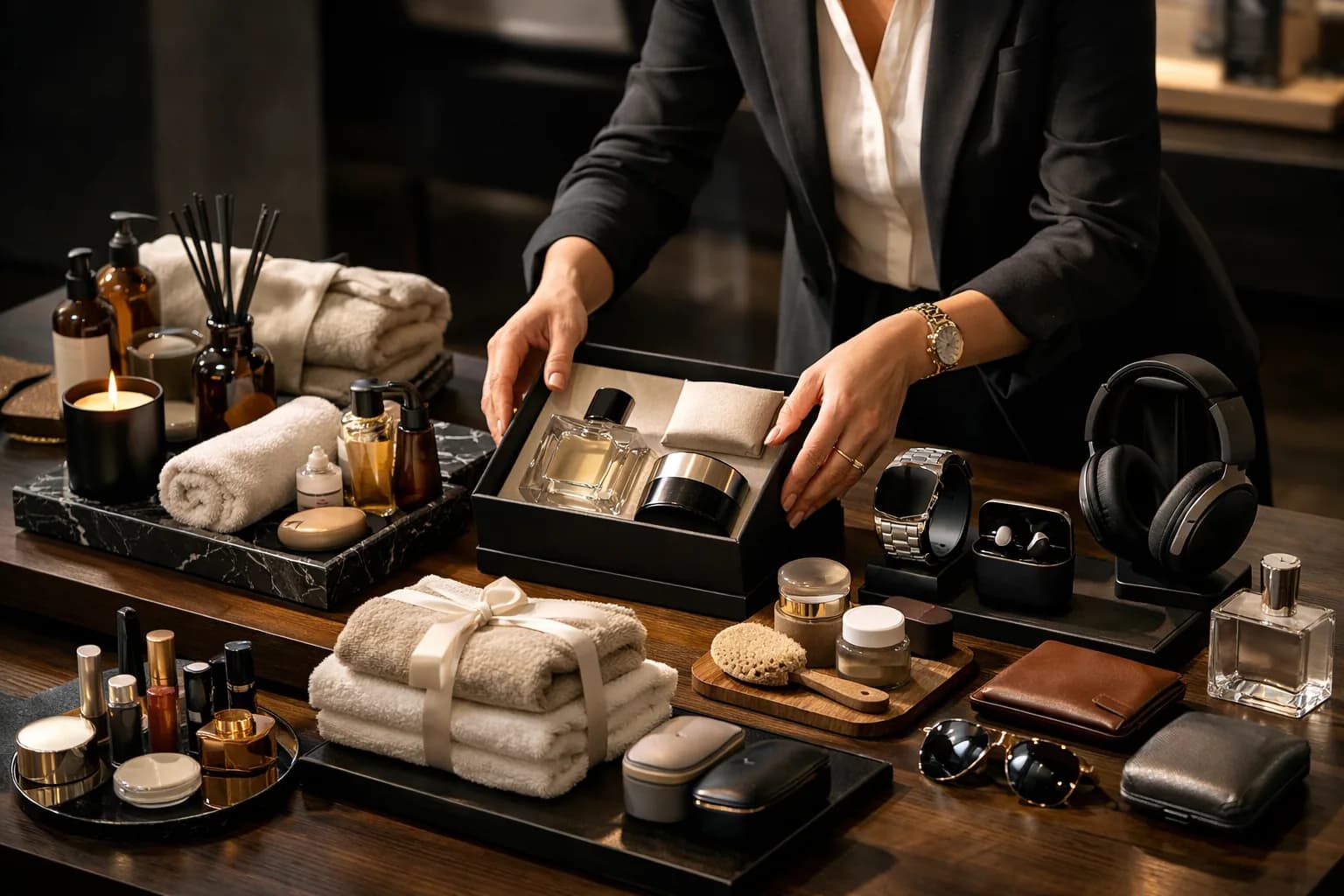
The best beauty bundles do not feel like cart padding. They feel like decision support. That usually means bundling around a regimen, concern, or use case: acne-prone skin, barrier repair, wash-day essentials, travel set, shave routine, AM essentials, PM repair, or starter kit.
Shopify’s own bundling examples point in this direction. Beauty bundles work when they combine complementary products that make sense together, such as foundation plus concealer, cleanser plus moisturizer, or shampoo plus mask.
Cross-sells should follow the same logic. A serum page should not recommend five unrelated products. It should answer the next natural question in the routine: what do I pair this with, when do I use it, and what should come before or after?
Good beauty bundling usually improves three things at once: conversion, average order value, and shopper confidence. That is because it reduces the cognitive load of building a routine from scratch.
Reviews, UGC, and offsite proof do different jobs
Reviews, UGC, and third-party credibility are related, but they are not the same. Treating them as one bucket usually weakens all three.
Reviews reduce uncertainty at the point of decision
UGC helps shoppers imagine real-world use and identity fit
Offsite proof helps validate that your brand claims are credible
For beauty, review quality matters more than review volume alone. Reviews become dramatically more useful when they include attributes such as skin type, tone, concern, age range, hair type, or sensitivity context. Shopify explicitly points out that health and beauty reviews are stronger when reviewers describe themselves, because it helps other shoppers relate and buy with more confidence.
Bazaarvoice’s 2025 consumer survey also reinforces the importance of reviews: all 2,500 respondents said online reviews matter when purchasing a new product, and mixed positive-and-negative reviews improved trust for many shoppers.
That means beauty brands should avoid over-moderated review presentation. A useful review stack usually includes:
- Verified buyer labels
- Photos and short videos where possible
- Reviewer descriptors that map to the category
- Review filters by concern, shade, skin type, or hair type
- Pros and cons, not just star averages
- Clear surfacing of most helpful reviews, not just most recent ones
Also remember that beauty shoppers often verify your claims offsite. They look at Google results, TikTok, Reddit, YouTube, and creator reviews to decide whether your promises feel real. Your on-site trust content should assume that behavior, not ignore it.
Collection pages should merchandize by concern and routine
Many beauty stores organize only by product type: cleansers, serums, moisturizers, masks. That is useful, but it is not enough. Beauty shoppers often think in concerns and desired outcomes before they think in formulas.
Stronger beauty collection architecture usually includes paths like:
- By concern: acne, sensitivity, redness, dryness, barrier repair, shine control
- By routine: morning routine, night routine, wash day, travel, post-workout
- By preference: fragrance-free, refillable, vegan, dermatologist-tested
- By proof: best sellers, top rated, subscription eligible, staff picks
- By stage: starter routine, advanced routine, maintenance, treatment
Shopify’s current social-proof guidance is useful here too: put star ratings, customer photos, best-seller cues, and top-rated collections where people browse, not just where they buy. Beauty shoppers compare heavily before they commit.
Trust is built by specificity, not vague claims
Beauty customers are increasingly resistant to empty superlatives. “Clean”, “science-backed”, “clinical”, “luxury”, and “results-driven” do very little on their own. If you use a claim, define it.
That means translating vague brand language into specifics such as:
- What the product is intended to improve
- What evidence or testing supports the claim
- What ingredients are included and excluded
- What realistic results a shopper should expect
- What skin or hair types the product is best suited for
- How returns, shipping, and subscription management work
Supplemental trust pages matter more in beauty than many operators assume. Ingredient philosophy, manufacturing standards, sourcing, FAQs, and brand mission can all strengthen conversion, especially for newer brands that shoppers have not encountered before. But these pages should support the PDP, not replace it.
For United States cosmetics, content is part of the control system
FDA guidance checked on August 1, 2026 says cosmetic claims must be truthful and not misleading; claims to treat or prevent disease or affect the body's structure or function can make the product a drug under United States law. MoCRA also gives the responsible person operational duties that storefront and support content should not contradict, including serious-adverse-event reporting, safety-substantiation records, product listing, and facility registration where applicable. Build an approved-claims library and escalation path instead of letting PDP, creator, and support copy drift independently. This is an operating checklist, not legal advice; confirm the exact obligations for each product and market with qualified counsel.
Metrics beauty brands should actually watch
Beauty brands should measure beyond top-line conversion rate. The more useful question is whether your content stack is reducing hesitation in the places where beauty shoppers usually stall.
PDP add-to-cart rate by category, concern, and traffic source
Review coverage rate, meaning how many hero SKUs have enough current reviews to be persuasive
Review interaction rate, especially filters, media clicks, and “most helpful” engagement
Bundle attach rate on regimen-driven products
Subscription take rate only on replenishable SKUs
Repeat purchase interval versus intended replenishment timing
Refund and support reasons, which often expose missing education
In beauty, support tickets are frequently UX research in disguise. If people keep asking whether a serum is safe for sensitive skin, whether a moisturizer pills under SPF, or how often a mask should be used, the PDP is under-explaining the product.
Best internal links
Related: Shopify product-page conversion guide, Shopify merchandising playbook, Shopify collections strategy guide, best Shopify subscription apps, best Shopify review apps, best Shopify bundle apps, Shopify conversion rate benchmarks, Shopify cart abandonment benchmarks, Shopify analytics playbook for operators.
Sources and further reading
- FDA, Cosmetics Labeling Claims
- FDA, Modernization of Cosmetics Regulation Act of 2022 (MoCRA)
- Baymard Institute, New Health & Beauty UX Research
- Baymard Institute, DTC users and product information
- Baymard Institute, brand and product information needs on DTC sites
- Shopify, Product Page Optimization
- Shopify Help Center, subscription business models
- Shopify, social proof and trust-building
- Shopify, customer trust research
- Shopify, product bundling guide
- Shopify, skin care marketing guide
- Bazaarvoice, why ratings and reviews matter
- McKinsey, State of Beauty 2025
Frequently asked questions
Should beauty brands lead with routines or individual products?
Usually both, but in a clear order. Individual product pages need to explain fit, use, and proof well enough to convert on their own, while collection and educational content should show how products fit into a routine. Routine framing works best when it clarifies the role of each SKU instead of burying the actual product choice.
How important are reviews and UGC for beauty conversion?
They matter a lot, but only when they reduce uncertainty. Beauty shoppers want evidence about texture, finish, fit, irritation risk, and real-world outcomes. Generic praise does less work than reviews and creator proof that make the product easier to evaluate.
What should a beauty product page explain before asking for the purchase?
It should explain who the product is for, how it fits into a routine, what ingredients or actives matter, what results are realistic, and how to use it. That is what turns a polished page into a credible buying decision.
Recommended reading
Keep exploring the playbook
Shopify merchandising playbook
A practical merchandising guide covering product grouping, cross-sells, bundles, category depth, and the storefront decisions that shape AOV and product discovery.
How to optimize Shopify product pages for conversion
A conversion framework for Shopify product pages covering merchandising, trust cues, media, pricing context, shipping clarity, and app-related friction.

Shopify collections strategy guide
A practical guide to structuring Shopify collections for search visibility, merchandising clarity, filtering, and stronger shopper paths.
Need a technical second opinion?
Bring us the constraint, broken workflow, or inherited setup. The first 20-minute fit call is free.
Book a free fit call