Shopify merchandising playbook
A practical merchandising guide covering product grouping, cross-sells, bundles, category depth, and the storefront decisions that shape AOV and product discovery.
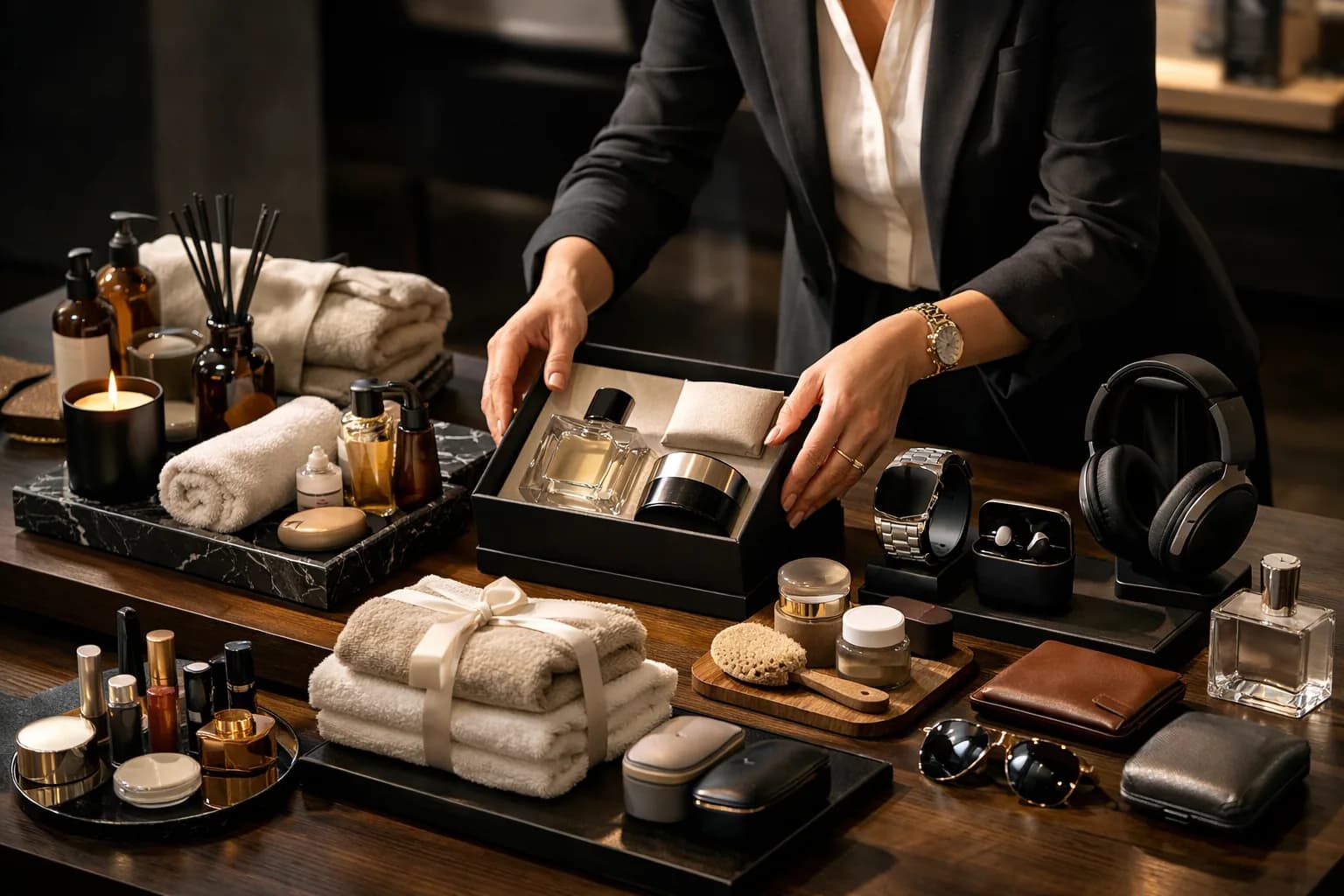
Merchandising is store design in motion
Merchandising is the operating system behind product discovery. It decides which products are grouped together, which options are easy to compare, what gets surfaced first, and what feels like a natural add-on instead of an interruption. On Shopify, that system spans collections, filters, search behavior, product grouping, recommendation blocks, bundles, cross-sells, and the sort order shoppers actually see. That is why merchandising should be treated as an ongoing operating discipline, not a one-off theme exercise.
“Google uses links as a signal when determining the relevancy of pages and to find new pages to crawl.”
That matters because merchandising is also SEO. A category structure that makes internal links clearer, reduces duplication, and sends shoppers down better paths usually helps both search visibility and conversion quality.
The wrong mental model
Many teams treat merchandising as homepage banners plus a few recommendation widgets. That is too narrow. Most of the commercial impact comes from how the catalog is structured and how product relationships are expressed across collections, product pages, and search.
Start with catalog structure, not widgets
Before you add another carousel, fix the data model that powers discovery. Shopify’s standard product taxonomy, product categories, and category metafields exist for a reason: they make it easier to organize products consistently and expose more useful shopper-facing attributes.
“Category metafields … help you add the right information to your products to make them more discoverable.”
In practice, this means a strong merchandising foundation usually starts with five things:
- accurate product categories
- consistent variant options such as color, size, material, or format
- metafields for shopper-facing attributes you want to filter or display
- clear collection logic that reflects buying intent
- clean naming so shoppers do not need insider knowledge to navigate the store
This is also where many stores still rely too heavily on tags. Tags are useful operationally, but Shopify’s own filter guidance points merchants toward metafields when they need tighter control over which filter values customers actually see. That is a better long-term pattern for scale, clarity, and cleaner navigation.
Build collection logic around shopping tasks
Collections should reflect how customers shop, not just how the business stores inventory. The best collection architecture usually combines a small number of high-intent category collections with a smaller number of curated editorial or campaign collections. As a default operating model:
use smart collections for scalable categories that should update automatically as products change
use manual collections for launches, gift edits, seasonal stories, and curation that needs human judgment
Shopify smart collections can use up to 60 conditions, and Shopify notes that smart collections are usually preferred when you want future products to be added automatically. That makes them ideal for real category management, but not for every merchandising story. There are also practical limits that should shape your information architecture. Shopify says collections with more than 5,000 products do not display filters. That is not just a technical footnote. It is a merchandising warning. If a collection is so broad that filters disappear, the category is often too broad for discovery anyway.
A good rule of thumb
If a collection name answers a real shopper task such as “starter decks,” “winter jackets,” or “press-on nails for short nails,” it is probably useful. If it only mirrors an internal vendor, campaign code, or stockroom concept, it usually is not.
Your collection pages should also be intentionally linked from navigation, content, and nearby category pages. Merchandising and SEO improve together when category links are crawlable, descriptive, and repeated in the parts of the site that actually matter.
Fix product grouping before you add more upsells
Product grouping is how related products find each other across your store. If that sounds abstract, think about what happens when a customer sees a product they almost want but not quite. Where do they go next? That is a grouping problem. On Shopify, that usually means deciding when a difference belongs as:
- a variant on the same product
- a separate product linked through combined listings
- a separate product family connected through related or complementary recommendations
Shopify now supports up to 2,048 variants per product, but more option capacity does not mean every product should become a giant variant matrix. If size, material, or color differences still describe the same buying decision, variants often make sense. If the differences carry distinct imagery, positioning, or search intent, separate products or combined listings often create a clearer storefront. Combined listings are especially useful when you want shoppers to experience multiple related products as one family while still preserving more descriptive URLs, richer product-specific media, and more control over how parent and child products appear in search and recommendations.
Use recommendations as guided discovery
Product recommendations should answer a specific job, not just fill empty space on the page. Shopify’s Search & Discovery app lets merchants set up to 10 complementary products and up to 10 related products for a given product, and you can show only custom recommendations or blend them with Shopify’s automatically generated suggestions.
“Displaying related products to customers makes it easier for them to discover new products.”
The key is to separate recommendation intent:
Related products help shoppers compare alternatives or nearby substitutes.
Complementary products help shoppers complete the purchase with add-ons, refills, accessories, or routine builders.
Stores often underperform here because every recommendation block is asked to do everything at once. A product page should not use the same logic for “you may also like,” “complete the set,” and “buy it with.” Those are different merchandising jobs and should be merchandised as such. Recommendation quality also matters more than recommendation quantity. One strong accessory block near the buy box is often worth more than three generic carousels fighting each other lower on the page.
Where bundles and cross-sells actually help
Bundles and cross-sells work best when they reduce decision friction or create a clearer value proposition. They work worst when they interrupt comparison, clutter the page, or introduce operational confusion.
“A bundle is a set of two or more related products, commonly offered at a discount.”
That simple definition is useful because it keeps bundles grounded. A bundle is not just a discount mechanic. It is a way to merchandise product relationships more clearly. Good bundle use cases include:
- starter kits that reduce choice anxiety
- routine builders that make replenishment easier
- frequently-bought-together sets with obvious complementarity
- giftable packages that simplify a multi-item purchase
Weak bundle use cases include random pairings, forced add-ons, or “save more” constructions that obscure what the customer is actually buying. Merchandising should make a purchase feel easier to understand, not more complex. There is also a separate class of bundle problem that does not happen in one session. If customers buy across drops, preorders, or restocks and want to build a box over time, a
Buy Now, Ship Later app like Addora
is a closer fit than a classic cross-sell widget. The merchandising job is not "add one more item before checkout"; it is "let the customer keep buying and choose one later shipment." Placement matters too. Use bundles where they clarify the purchase path:
- on the PDP when the bundle is a strong primary buying option
- in the cart when the add-on is obviously useful and low-friction
- post-purchase when the offer is additive and time-sensitive
Shopify also notes that bundles can sell through the Online Store, Shop, and Shopify POS, with Google & YouTube supporting fixed bundles only. That is a good reminder to evaluate bundle strategy as part of channel strategy, not only product-page design.
Ranking and sort order shape what sells
Merchandising is partly ranking. Even with the right collection and the right products, the order in which items appear has a large effect on what gets seen, compared, and added to cart. Shopify collection sort order can be based on best selling, title, price, newest, oldest, or manual sorting. Best selling on Shopify is based on the all-time number of orders that include the product. That can be useful, but it is not automatically the best commercial sort for every collection. A practical operator view is:
use manual sort when you want to stage hero products, margin leaders, or seasonal priorities
use best selling when social proof and broad appeal are strong proxies for what should lead
use newest for drop-driven stores where freshness itself is the point
use price-based sorting sparingly, because it often offloads too much work onto the shopper
This is also where price presentation becomes merchandising. Shopify’s compare-at pricing and sale-price display can change how products surface on collection pages and how shoppers read value. If the collection grid does not clearly communicate price position, discount logic, or best-entry-point items, the rest of the merchandising system has to work harder.
Measure merchandising like an operator
Merchandising should be measured by surface and by job, not just by storewide revenue. A good operating rhythm tracks whether the collection, product page, recommendation block, or cart intervention actually improved discovery and order quality. At minimum, review these questions every month:
- Which collection pages attract traffic but underperform on product clicks?
- Which product families generate high views but weak add-to-cart rates?
- Which recommendation blocks are actually clicked and purchased from?
- Which bundles lift average order value without reducing clarity or increasing returns?
- Which filters are used heavily, and which create dead ends?
GA4’s ecommerce guidance includes explicit support for internal promotion measurement, such as recording promotion impressions and clicks. That makes it possible to measure homepage promos, collection hero banners, and in-flow merch placements with more discipline instead of guessing.
Do not let AOV become the only goal
Higher AOV is useful only when it comes with healthy conversion, low regret, and a storefront that still feels easy to navigate. Merchandising that inflates basket size while weakening confidence is usually short-lived.
What to improve first
If your store’s merchandising feels messy, do not start by installing more apps. Start by tightening the core layers in this order:
Collections and taxonomy: remove overlap, fix naming, and make sure your top collections reflect real shopping intent.
Product grouping: clean up variant logic, combined listings, and product family structure so comparison feels natural.
Filters: keep only filters that genuinely reduce choice friction, and use metafields where customer-facing values need tighter control.
Recommendations: separate related-product logic from complementary-product logic and remove low-value duplicate widgets.
Bundles and cross-sells: add them only where they clarify the purchase or complete it.
Measurement: instrument clicks, promotions, and template-level outcomes so changes can be judged by evidence rather than taste.
Related: Best Shopify bundle apps, Shopify collections strategy guide, Shopify product-page conversion guide, Shopify returns policy guide, beauty merchandising playbook, supplement merchandising playbook, and trading-card store playbook.
Sources and methodology
This guide uses Shopify Help Center documentation, Google Search Central, and Google Analytics documentation. The goal is not to produce a generic “10 tips” article, but to anchor merchandising advice in the actual operating levers Shopify merchants can control.
- Shopify Help Center: Customize product recommendations with Shopify Search & Discovery
- Shopify Help Center: Adding filters with Shopify Search & Discovery
- Shopify Help Center: Product bundles
- Shopify Help Center: Collection layout and appearance
- Shopify Help Center: Smart collections
- Shopify Help Center: Creating and modifying smart collections
- Shopify Help Center: Category metafields
- Shopify Help Center: Adding color swatches using category metafields
- Google Search Central: Link best practices for Google
- Google Analytics for Developers: Measure ecommerce
Frequently asked questions
What should merchants fix before adding more upsell widgets?
Start with catalog structure, collection logic, product grouping, and recommendation quality. Those systems shape discovery and basket-building more consistently than another homepage banner or generic carousel.
Is merchandising mainly an AOV tactic?
No. It is also a navigation, discovery, and conversion tactic. Strong merchandising helps shoppers understand the catalog faster, compare products more easily, and find the next-best item without adding clutter.
How do I know whether Shopify merchandising is improving?
Track revenue per session, AOV, add-to-cart rate, collection-page engagement, zero-result search behavior, and whether recommendation modules actually support product discovery. The goal is not just bigger carts. It is cleaner paths to the right product mix.
Recommended reading
Keep exploring the playbook

Shopify collections strategy guide
A practical guide to structuring Shopify collections for search visibility, merchandising clarity, filtering, and stronger shopper paths.
How to optimize Shopify product pages for conversion
A conversion framework for Shopify product pages covering merchandising, trust cues, media, pricing context, shipping clarity, and app-related friction.

Best Shopify bundle apps
A research-backed comparison of Shopify bundle apps, including classic product bundles, build-a-box tools, and bundle-and-ship-later workflows such as Addora.
Need a technical second opinion?
Bring us the constraint, broken workflow, or inherited setup. The first 20-minute fit call is free.
Book a free fit call